
Palm Desert council backs police drone program, real-time surveillance center
The Drone as First Responder program and Real-Time Crime Center together carry an estimated price tag of more than $5 million spread over five years and split between Palm Desert, Rancho Mirage, and Indian Wells.
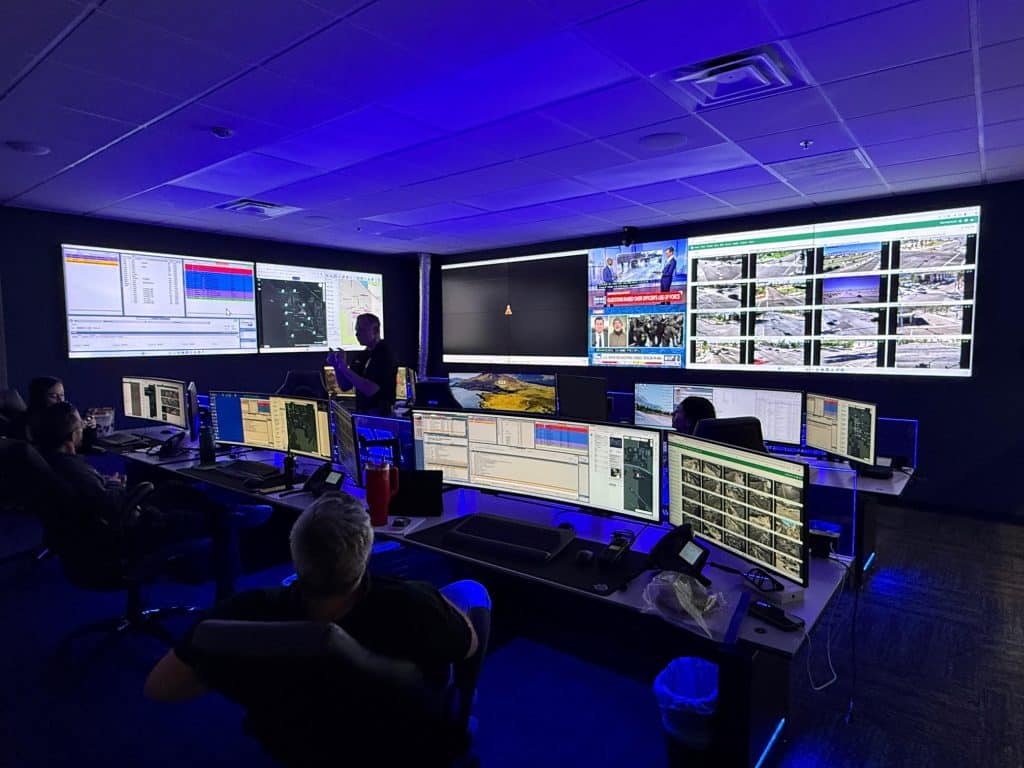
The Palm Desert City Council signaled support Thursday for a potential Drone as First Responder program and Real-Time Crime Center, directing staff to continue evaluating the technology after a study session presentation from the Riverside County Sheriff’s Office.
No vote was taken. The session was intended to gather council feedback only, with no funding, contracts, or implementation decisions on the table.
The drone program, known as DFR, would deploy drones from fixed locations the moment a call for service comes in, providing deputies with real-time aerial views of an incident before or as they arrive on scene. The proposed Real-Time Crime Center, or RTCC, would serve as a centralized hub integrating drone feeds, license plate reader data, dispatch information, live camera systems, with “other data sources” from regional partners.
The proposed RTCC would act as a hub for surveillance and would include a massive 12-by-6-foot ultra-high-resolution LED video wall, 12 analyst and operator workstations, and integration with camera systems from the Coachella Valley Association of Governments and Flock Safety license plate readers.
Riverside County Chief Deputy Ken Reichle said trained personnel working inside the proposed surveillance center, “They’re not just watching screens they’re analyzing data, identifying patterns, and pushing relevant information directly to the responding units.”
“The RTCC can monitor surrounding activity, identify related vehicles or individuals, and coordinate resources across multiple incidents if needed,” he said.
The estimated cost of the drone program is approximately $4.2 million over five years, or roughly $846,000 annually, covering nine docked drone systems, four patrol drones, software licensing, unlimited evidence storage through the Axon platform, training, and long-term operational support.
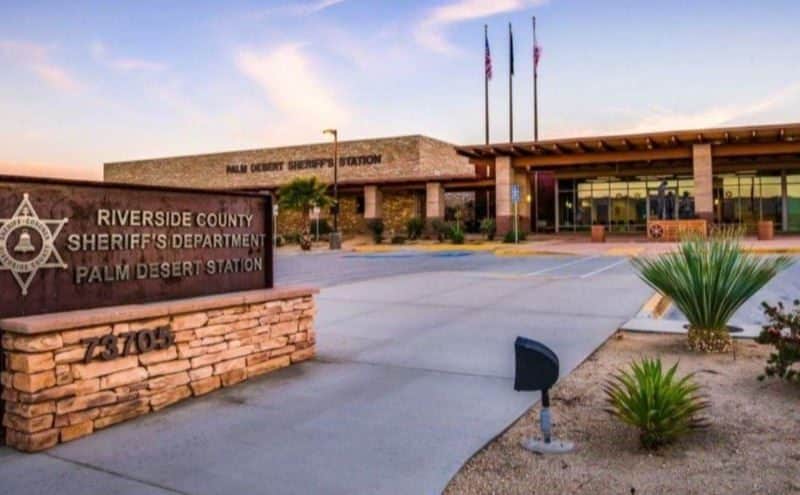
The surveillance center buildout, which would be housed in a new dispatch center at the Riverside County Sheriff’s Palm Desert station, carries an estimated cost of approximately $1.2 million. Those figures represent the estimated total cost for the three Cove communities — Palm Desert, Rancho Mirage, and Indian Wells — with a cost-share model yet to be finalized.
Councilmembers raised questions about privacy, asking how residents would be protected from drones flying over private property. Reichle said the drone cameras point toward the horizon while in transit, “When it arrives at the call for service, then the camera is deployed, and then you begin searching, looking, providing information.”
“If you had a drone fly over your backyard, you go into the portal,” Reichl said. “There’s a map, it’ll show a line of its flight travel, and you can go, ‘Oh, it’s responding to a burglary in progress.'”
Councilmember Gina Nestande expressed overall support while acknowledging the tradeoffs involved. “The only negative I see is individual freedom that we do give up as a society, and I do worry about our individual freedoms,” Nestande said. “But I believe this is a step that will really improve our community.”
Councilmember Karina Moreno framed the privacy debate in practical terms.
“Until it’s your loved one that’s missing, until there’s an Amber Alert, until there’s a missing person — and then it’s, ‘Where were the cameras?'” Moreno said. “It’s the balancing act that we have to do in the 21st century.”
Mayor Evan Trubee also voiced support for the program while flagging one concern. “I would never want to see the human element removed from policing,” the official said. “The concern is that you turn it over to automation and remove the human empathetic element or decision making.”
Palm Springs and Cathedral City are already jointly operating a DFR program and crime center, with their facility run out of Palm Springs. Reichle said the proposed Cove RTCC would be able to communicate directly with the Palm Springs system in real time. La Quinta has been in discussions but has moved more slowly.
Staff will continue refining program scope, costs, governance structure, privacy safeguards, and an operational framework before returning to the council with a formal proposal for consideration.
Author

Related Articles
Palm Desert public safety roundup: March 26 through April 1
The following incidents are based on the Riverside County Sheriff’s weekly report for March 26 – April 1, 2026, which was released on a later Thursday.
Palm Desert public safety roundup: March 12-18
The following incidents are based on the Riverside County Sheriff’s Department’s weekly report for March 12 through 18. Reports are typically released on Thursday.
Palm Desert public safety roundup: March 5-11
The following incidents are based on the Riverside County Sheriff’s Department’s weekly report for March 5 through 11. Reports are typically released on Thursdays.