
Palm Desert expands license plate camera network to 157, approves up to $2.5 million in future upgrades
Councilmembers left the option open to consider adding live-view cameras to city parks in the future.

The Palm Desert City Council voted 5-0 Thursday to expand its Flock Safety surveillance camera system, approving solar-powered conversions for nine pending cameras and raising the program’s contract ceiling to $2.5 million.
Daniel Hurtado, management analyst for the city, said more than 600 California law enforcement agencies have access to Palm Desert’s automated surveillance data.
“They don’t automatically have access to the Flock data,” Hurtado said. “It’s not an automatic opt-in, and it can be revoked and the shared data cannot be reshared without permission.”
Several cities have recently decided to end Flock contracts after data sharing and privacy concerns, and cities in California have raised concerns about federal agencies like Immigration and Customs Enforcement making requests of local police departments, skirting state law.
Thursday’s vote brings the city’s approved Flock Safety Automated License Plate Recognition system to 157 total cameras, with 148 currently deployed. The nine remaining cameras, all located along El Paseo, were previously ordered but not yet installed.
Unlike the standard automated license plate reader (ALPR) cameras deployed elsewhere in the city, city staff said they want to pilot live view cameras along El Paseo, providing real-time video feeds rather than license plate capture only.
“We wanted to do a phased approach, and see moving forward if we do want to go with that recommendation to go ahead and implement those cameras in parks etc., they would be live views,” Hurtado said, adding that business owners along El Paseo sent a letter of support for the plan.
The council also authorized the city manager to approve future Flock Safety order forms, equipment additions, and relocations without returning to council for each change, provided the total contract amount does not exceed $2,500,000 through June 30, 2029. That action raises the city’s total contract authority from $2,106,250 to $2,500,000 — an increase of $393,750 in available capacity for future camera installations, upgrades, and other public safety needs.
The city first deployed 49 Flock cameras in October 2022. The council added 44 cameras through a separate amendment in April 2025, bringing the planned system total to 157. A map of the city’s cameras can be seen here.
The expansion came alongside a city memo responding to concerns, stating that the city’s network settings are configured to block federal and out-of-state agencies from accessing Palm Desert’s ALPR data, and that monthly audits are conducted to confirm no unauthorized agencies have been granted access.
The memo also disclosed one prior incident of improper system use involving a Riverside County Sheriff’s Department employee who used the surveillance tool for a purpose not tied to a legitimate law enforcement case. The employee was terminated and criminally prosecuted, and additional safeguards, policies, and audit procedures have since been put in place.
Councilmember Karina Moreno said the disclosure should reassure the public. “I’m happy that that can reassure the public that it is flagged, and it does have a substantial result for the individual,” Moreno said.
Mayor Evan Trubee raised a concern about future camera deployments beyond roadways into public gathering spaces such as parks. “My concern is that this opens the potential for more than just license plate, if we’re in parks and other areas where maybe we’re not on the roadway anymore, we’re in a place where people are just gathering,” Trubee said.
Staff confirmed the council will retain oversight before cameras are added to parks or similar non-roadway locations.
Author

Related Articles

Palm Desert council votes 4-1 to oppose bill splitting Riverside County sheriff, coroner offices
The measure would create an independent medical examiner’s office by next year. Councilmember Karina Moreno cast the lone dissenting vote.
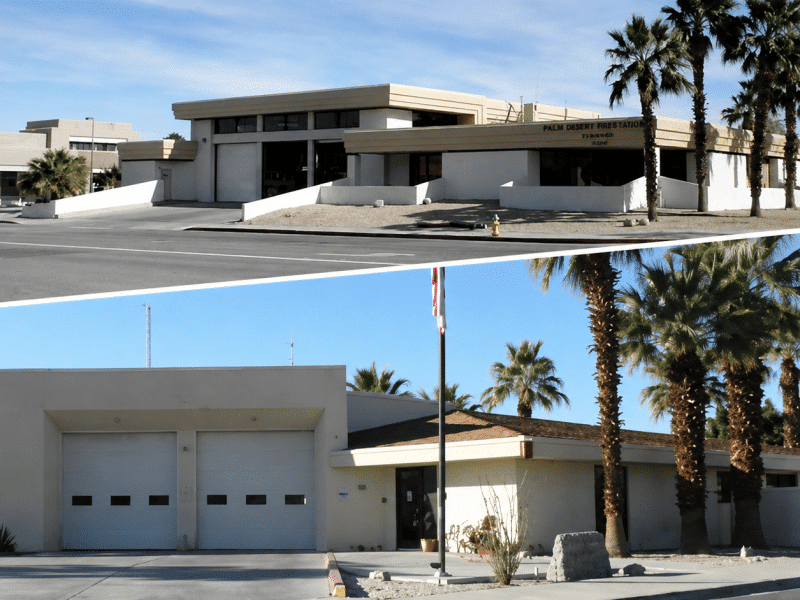
Palm Desert council approves construction manager for two fire station rebuilds
Fire Station 33, at 44-400 Town Center Way, will undergo tenant improvements, while Fire Station 71, at 73-995 Country Club Drive, will be demolished and rebuilt.

Assemblymember brings state agencies to Palm Desert for senior scam seminar
With older Americans losing a staggering $7.7 billion to fraud last year, a multi-agency panel held locally revealed how modern scammers use easily available tech and psychological manipulation to exploit loneliness.