
City Council approves regional surveillance center, delays police drone decision
“(M)aybe the public got caught unaware. Maybe I did,” Mayor Evan Trubee said before he and the rest of the council voted to delay a decision on police drones.
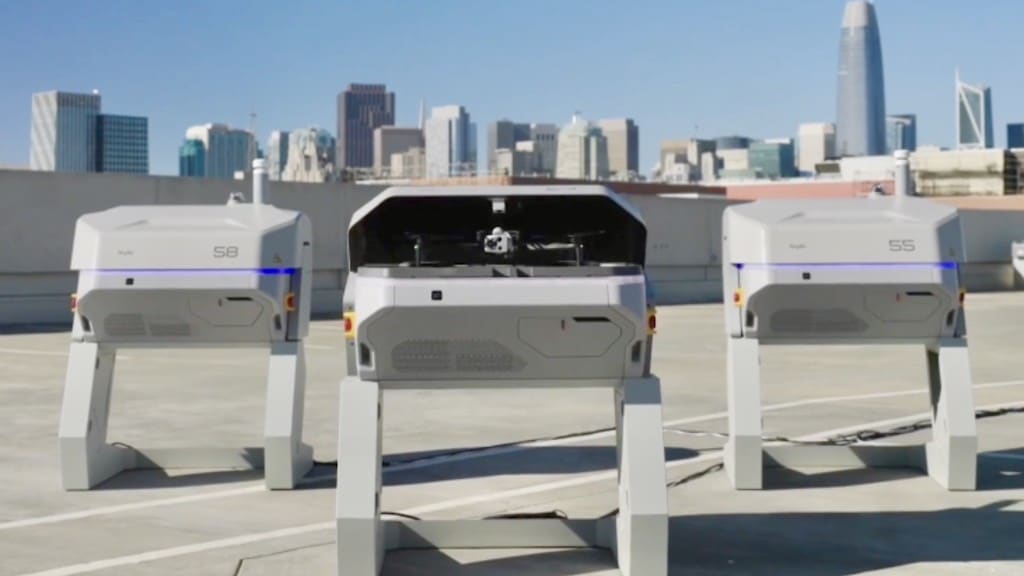
The Palm Desert City Council on Thursday approved a regional surveillance center on a 4-1 vote, then unanimously postponed a decision on a police drone program until the new year.
Councilmember Karina Moreno cast the dissenting vote on the surveillance center that Riverside County Sheriff’s deputies are calling the Real-Time Information Center. The council then agreed to hold public outreach with the Sheriff’s Department before deciding on the drones.
The surveillance center would sit inside the sheriff’s new dispatch facility at the Palm Desert Sheriff Station. It would have a video wall and workstations, giving authorized sheriff’s personnel access to live video feeds, maps, and open-source information posted online, “related to planned or ongoing special events, large gatherings, or incidents that may impact public safety,” according to the department’s draft policy.
The drone program, which would use an Axon Skydio X10 drones, calls for 11 dock-based drones at six launch locations. Sheriff’s pilots would fly them remotely to calls where an aerial view could help. Sheriff’s policy bars random patrols, immigration enforcement and weapons on the drones, and facial recognition is excluded from the proposal.
The center is a one-time cost of about $1.2 million, split equally among Palm Desert, Rancho Mirage and Indian Wells. Palm Desert’s share is about $400,000, and the city would advance the other two cities’ shares, with reimbursement expected. The drone program would cost about $770,000 a year for the region, or roughly $3.85 million over five years. Together, the two come to about $5.05 million over five years.
The three cities, known as the Cove communities, have not settled how to split the drone costs. The $770,000 is the regional total, not Palm Desert’s share. Rancho Mirage and Indian Wells have so far approved the information center but not the drones.
Opposition arrived by email. Thirty-five individuals wrote to the city, and every one opposed the drones. Trubee said he could not set that aside.
“I have to honor that,” Trubee said. “It’s unusual to get that many responses from the public with concerns.”
Many of the writers questioned whether the sheriff’s office could be trusted with the data and all objected to the growing surveillance state.
Others wrote about what drones would mean for daily life. “Our privacy is not an inconvenience. Our homes are not surveillance zones,” wrote Yanet Hernandez, a lifelong Palm Desert resident. Ella DeMaria of Twentynine Palms wrote: “We all love the serenity of a desert sky. Drones will disrupt this.” Michael Ruggiero of La Quinta wrote: “We gave up our streets — for now. Don’t surrender our skies.”
Trubee said the volume of response surprised him.
“I just feel like maybe the public got caught unaware. Maybe I did. I’m not sure, but I was surprised by the feedback,” he said, adding that he would like to hear from residents before deciding whether to move forward.
Trubee acknowledged he had misunderstood how the city’s license plate readers work. He had thought they captured data only during an investigation and then switched off.
“Mea culpa,” he said, describing it as “eye-opening to me that in fact we are in a very real way being surveilled.”
Mayor Pro Tem Joe Pradetto questioned the timing. He noted the city had fully staffed its deputy ranks about a month earlier. “What is the urgency, or the problem we’re trying to solve with the urgency of early adopting?” Pradetto asked.
Trubee said the city has built out about 150 Flock cameras and hired six deputies. “I’d like to see how that all plays out,” he said.
Moreno said “the public wants to know to which extent are they being monitored.” She said the drones are not urgent. “There is not an immediate need,” she said.
A sheriff’s deputy told the council the technology would “make our community 100 times safer.” He said the information center would still work without drones, but “we will be missing a big part. The big part is the eye in the sky, the real-time information.”
He said the department’s rules around drones would prevent misuse, and that the drone camera is not pointed down while in flight, only when it arrives at the scene does the camera move down to survey the area.
Councilmember Jan Harnik supported the drones. “I’m looking at this as an information gathering tool. Nothing nefarious,” she said. Pradetto, though sympathetic to deputies wanting “eyes in the sky,” said: “Maybe drones aren’t the first thing we lead with.”
City staff said they would plan online and in-person outreach before voting at the second meeting in January.
Author

Related Articles

Palm Desert council votes 4-1 to oppose bill splitting Riverside County sheriff, coroner offices
The measure would create an independent medical examiner’s office by next year. Councilmember Karina Moreno cast the lone dissenting vote.
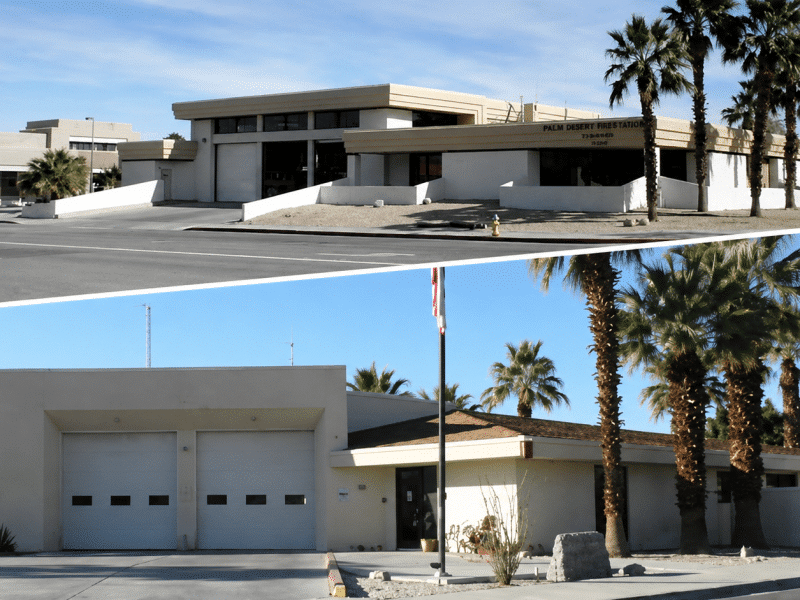
Palm Desert council approves construction manager for two fire station rebuilds
Fire Station 33, at 44-400 Town Center Way, will undergo tenant improvements, while Fire Station 71, at 73-995 Country Club Drive, will be demolished and rebuilt.

Assemblymember brings state agencies to Palm Desert for senior scam seminar
With older Americans losing a staggering $7.7 billion to fraud last year, a multi-agency panel held locally revealed how modern scammers use easily available tech and psychological manipulation to exploit loneliness.