
City Council approves view study as a reference document, not a new rule
City staff said the 13 recommendations for protecting mountain and landscape views will guide future planning but create no regulations, change no standards and commit no funding.

The Palm Desert City Council voted 5-0 Thursday to approve a set of 13 recommendations for preserving public views as a reference document, an action that creates no new regulations.
Carlos Flores, deputy director of development services, told the council during its regular meeting the approval does not change development standards or commit funding for projects. He said staff will use the document as a reference for future work, including the Unified Development Code, objective design standards and capital projects.
The study, prepared by consultant JKA, defines views as those experienced from publicly accessible places such as parks, trailheads, open spaces and roads, not from private backyards. It emphasizes views of the mountains to the west and north and of the landscape within the city, Flores said.
The recommendations fall into four categories: general, corridor views along roadways, open space views and key sites for future development. They include updating the General Plan’s view policies, designating the Whitewater River Wash as a major viewshed resource and orienting public spaces toward significant views.
Some recommendations would affect building. One says height standards along scenic roadways, downtown and key viewshed locations could include limits of two or three stories at street frontages. Another calls for amending the zoning ordinance to require lower heights and larger setbacks along the edges of city parks and other public open spaces. A third suggests incentives such as density bonuses for projects that preserve priority views. The study says implementation is subject to feasibility, including engineering and operational considerations.
Councilmember Jan Harnik asked whether the document would give the city enforcement power if needed. Flores said it is a guidance tool for staff and the council and carries “no teeth for any private development.”
He said a project submitted the next day would be reviewed under the standards already in place. A recommendation would carry that kind of weight only if the council later adopted a standard or other action based on it, he said.
Flores said the intent is not to restrict private development, and the city would not have the ability to do so with this document alone. Councilmember Karina Quintanilla described the document as a statement of the city’s preferences, and Flores agreed.
Staff developed the recommendations after a June 25 council study session, an online public input tool that ran through August and an interdepartmental review. Flores said the council can identify specific recommendations for staff to prioritize at future meetings.
A city staff member told the council that it asked staff earlier this year to start with views among about 20 planning initiatives, and that the work will feed into later code and standards updates. “This is just the beginning,” the staff member said.
Author

Related Articles
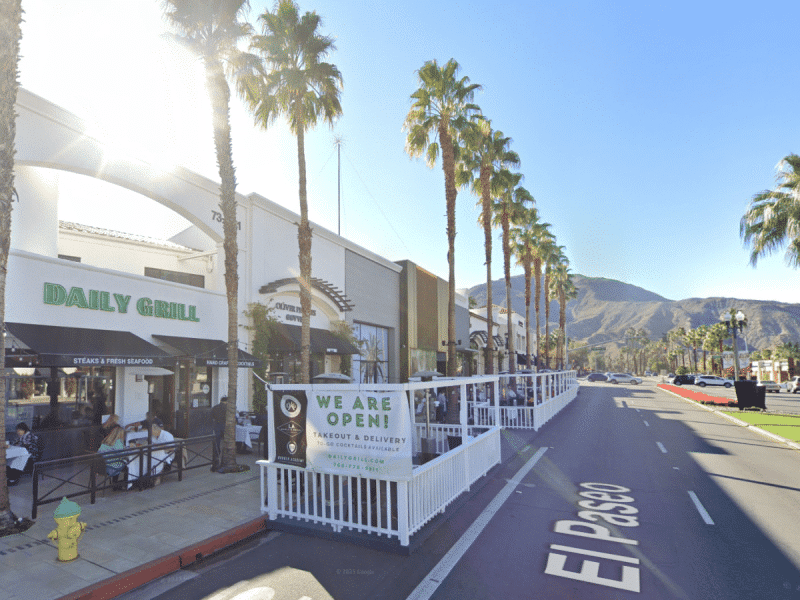
Palm Desert council backs removable-sidewalk plan for permanent outdoor dining
During a Thursday study session, councilmembers said they support advancing a program with a preferred design for El Paseo, while noting only two restaurants are using the current program.

City leaders considering extending COD lease for library instead of building new
Mayor Evan Trubee told a city committee Tuesday that renovating the existing space at College of the Desert could cost $10 million to $12 million, far less than a standalone building.

Palm Desert delays Portola Avenue assisted living expansion over design, roofline concerns
Plans to expand the Homekind assisted living facility on Portola Avenue were sent back to the drawing board Tuesday after the Architectural Review Commission voted on several requirements for the developer.